Sharmistha Dasgupta: A Myriad Quill Canvas

Thinking, observing and writing on anything and everything that tugs at my heart

  • If 2024 taught me how to embrace loss, 2025 made me realise the necessity of letting go. I wouldn’t say I have mastered the lesson yet to implement it successfully, but I’d like to believe I tried and I’m still trying with every ounce of my being.

    There is no comparison that stands when it comes to weighing losses. No scale can tip to make your loss less valid. Pain exists in its own right, just as any of us.

    They tell me you are letting your grief overstay its welcome. How do I explain it wasn’t my choice to welcome it in the first place? Worse, when they say you are letting your grief stay longer than he stayed.

    My heart sinks. I take a deep breath.

    “But you both never even dated.”

    My heart silently screams, “But we connected in a way I can’t explain. He understands me in a way no one can. As if we had always known one another…”

    I open Instagram and scroll through ‘Fleabag’ reels. I feel seen.

    Grief looks different for each one of us, or so I realised this year. Even for the same person, it looks different on different days and different even in different hours of the same day. This year, I realised more than ever how we all are living under a façade. You might be the best-dressed person in a room trying to forget the engulfing bitterness for the evening. But it would not cross anyone’s mind. People are easy to deceive. More so, in this present world of social media. They mistake the highlights for the person’s entire life without giving a second thought to what they may be enduring behind the scenes.

    It took my heart months to come to terms with his absence. Like muscle memory, perhaps the heart too has its own kind of reflexes.

    Honestly, I wouldn’t even call it a situationship. Perhaps the most beautiful things in life carry no labels. They just simply exist.

    I recently read about ‘The Train Theory’ in the caption of an Instagram reel. I quote a line from the post, ‘…two people sharing the same emotional speed for a brief moment without belonging to each other.’ Nothing gave me more solace than reading that short write-up. It seemed as if what I’m going through is probably not that rare. Pain lessens when you know you aren’t alone.

    But what makes moving on harder is when you know that none of you actually hate each other. In fact, when the circumstances are to blame, the feelings in most cases are quite the opposite. You can’t help but engage in wishful thinking. Of a reality where the two of you did belong to each other. However, the past weeks made me realise, we in fact did belong to each other in a way perhaps we can never with anyone else. Belonging isn’t always about a happy ending, flowers and butterflies. It’s also about how two people can change each other for the better and evolve as different humans when what they shared comes to an end. While there maybe a ton of unfulfilled wishes and dreams, maybe they came into your life to introduce you to the new dish, the new word, the new place, and maybe a dozen other new(s) that are your bittersweet favourites now.

    Some losses are deeply transformative just like the role of the person in your life who you lost. Something shifts inside you, because you know that you now have what you didn’t when you met them. Yet you are stuck in a version of reality that no longer holds true.

    But life stops for no one. If they have taught you how to live better, perhaps you know what you owe them.

  • If you had internet access and were even remotely active on social media in 2025, you must not be oblivious to the ‘Bonrad’ frenzy that gripped the web world for months this year. Even Oxford took note of it, or so it may seem.

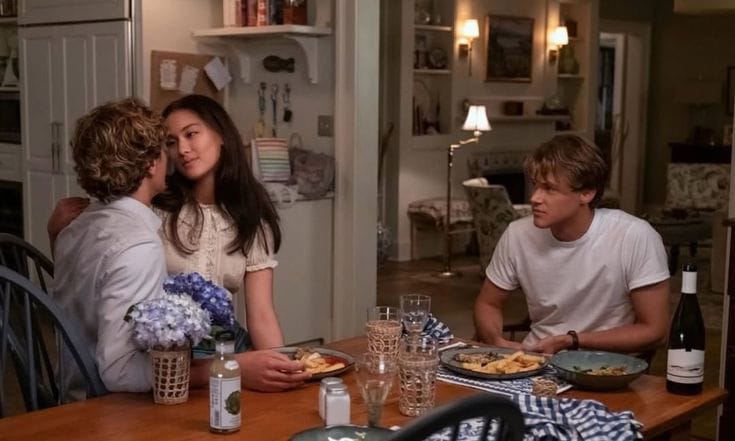
    The third and final season of ‘The Summer I Turned Pretty’ created by author Jenny Han for Amazon Prime Video aired weekly every Wednesday from July 16 till September 17.  With a mashup of Taylor Swift’s ‘Daylight’ and ‘Red’ playing in the teaser, fans were certainly teased of a ‘Bonrad’ endgame when Conrad (Christopher Briney) appears towards the end after it shows how steady Belly (Lola Tung) and Jeremiah’s (Gavin Casalegno) 4-year old relationship was. They did speculate how Conrad’s return from California to the Cousin’s beach house in his camel-coloured coat sucking on a candy right before Christmas would turn the tables. However, that did not confirm the madness and rage that was yet to come about.

    Until the second season, there was an animosity between the rooters for Conrad and the ones for Jeremiah. At least, the concept of Team Jeremiah existed. Jeremiah’s supporters banked their emotions on how he was wronged in the first season after Belly changed her mind to be with his elder brother and her childhood crush Conrad after making out with Jeremiah.

    Conrad, however, is depicted as a teen who is not in sync with his emotions for Belly. That is justified for he has a lot going on. Susannah, the mother of the two brothers, suffers from cancer in the first season and eventually dies. Conrad silently carries the burden of knowing about his mother’s sickness in the first season and their father’s extra-marital affair to protect his mother and brother’s peace. He is shown as someone who pushes Belly away in contrary to how he feels for her. But Han makes sure to plant the idea of their soulmate-ism in the hearts of the fans since the first season itself. She does it with the music, the infinity neckpiece and Susannah’s iconic line, “For Belly, Conrad is the sun and when the sun comes out, the stars disappear”. Conrad is introduced in the series with Swift’s ‘Lover’. In the deb ball, Jeremiah was supposed to be Belly’s dance partner. But fate takes things in its hand, when Belly’s Prince Charming aka Conrad had to walk towards her as her partner with Swift’s ‘The Way I Loved You’ playing in the background. Also, the recurrence of the infinity symbol and the neckpiece throughout the series convey how there is an ‘invisible string’ tying them to one another.

    From the third season, however, the attitude of the fandom takes a drastic turn with how the story unravels and the portrayal of the same. Noticeably, the concept of Team Jeremiah fades away.

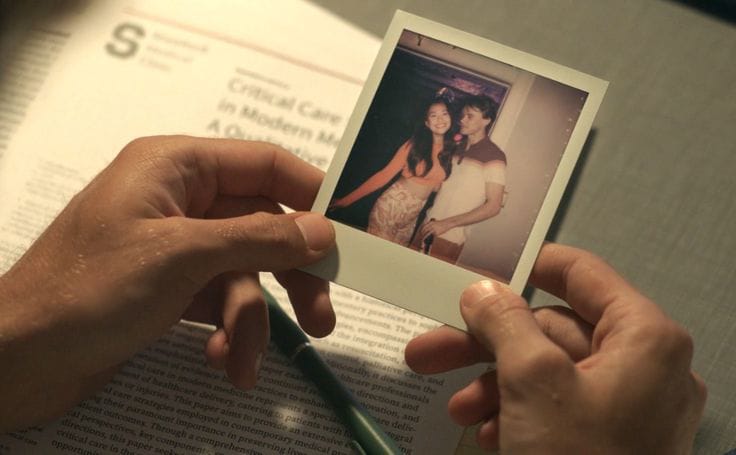
    In a world that is starved of the bare minimum acts of care, Han shows that what the world wants from relationships currently is not grand gestures. The reason she managed to garner the support and attention of millions across continents was because of her portrayal of an evolved, independent Conrad who goes to therapy, addresses his emotions and thus does not shy away from expressing how he feels for Belly, now his former girlfriend and family friend. At a time when ghosting and playing hard to get is the norm to keep someone’s focus hooked on to the said person, Han showed us that the only thing that can heal all the hearts rooting for ‘Bonrad’ is an old-school love story. In this era of virtual existence, when people can move on in seconds, Han fed the fandom with a slow-burn trope centered on yearning. From the soft gazes and eye contacts Belly and Conrad shared, him cancelling his flight and baking for her when he found her crying, him keeping an old photograph of them in his drawer in California and writing letters to her while she was in Paris and sending her a care package during the holidays so that she finds an essence of home in her first Christmas away in a different country, it almost seemed he is a remnant of the World War Two generation.

    However, one thing that I could not help but notice was how Jeremiah’s character was practically reframed to cultivate the support for ‘Bonrad’. I do believe that infidelity is the last straw, but the way the character was portrayed as an immature and irresponsible ‘manchild’ (as netizens termed it), was something that did seem forced instead of a natural revelation.  Whether it was his insistence for cacao in the wedding cake when they were short on funds, or the wedding proposal itself, it all seemed far-fetched for Jeremiah. Han’s deliberation was only too visible to even a casual viewer.

    The Internet can be a very emotive, unrestrained and brutal platform. The hate for Jeremiah and even Casalegno poured in with no sensitivity. It took a total 8 episodes for the viewers to look at Jeremiah’s side of the story when he told Belly, “You can’t marry me to erase him (Conrad)” when the wedding was called off after Conrad confessed to Belly that he still loves her.

    As humans, we get fixated on the ideas of almost(s) and could-have-been(s). Certainty and stability seldom make good fiction. There was justification for how angry the fandom became when Jeremiah cheated on Belly with Lacie, but it was how Han sketched the slow-burn ‘Bonrad’ arc this season that can be called as ‘rage bait’ as per the Oxford definition. Coincidentally (or maybe not) ‘rage bait’ also happened to be Oxford’s Word of the Year.

    The Parisian endgame was however the perfect ending that the fans ‘yearned’ for. From high-school students to married couples and even people above 60, Han surely captivated hearts from all age groups. The world could not resist the chivalry Conrad exhibited, as Instagram reels on modern dating drew comparisons of the two brothers while their wrath for Jeremiah shaped the algorithm.

    For the Gen Z, who lived and breathed the ‘Bonrad’ madness on Instagram, Reddit, Facebook and practically every platform, Belly and Conrad’s story did make them reflect on what their hearts crave most. Being the non-chalant one might be their go-to move, but if anything, it did make them realise that it can only take them so far.

  • I once read somewhere, “Grief is love with no place to go.”

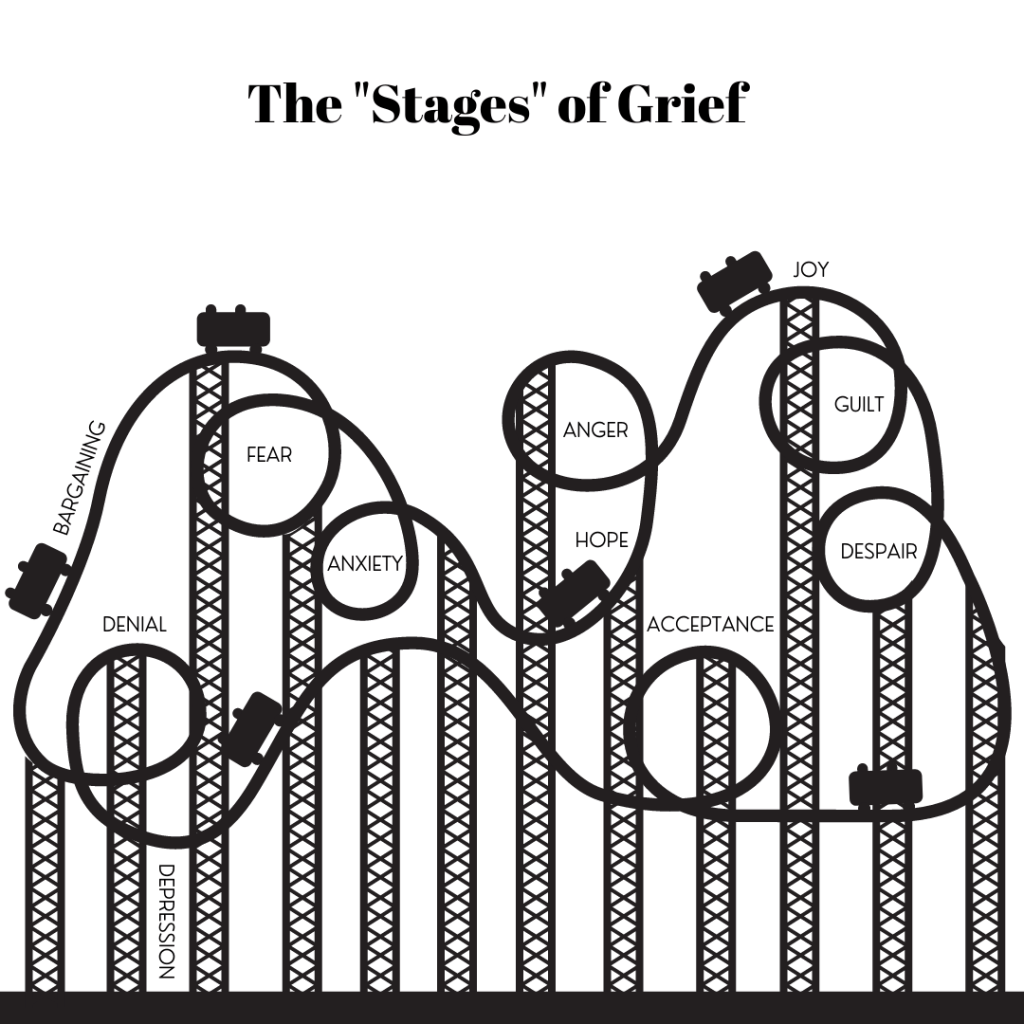
    Grieving is never a linear process. Rather it is a messy one, engulfing every ounce of spirit we have in our being. Until a few years ago, I used to think that it is only the dead whom we grieve. Navigating through my twenties has made me realise that it also encompasses bonds and relationships that we have lost, possibly forever. In other words, we grieve people and the bonds we once shared with someone, that we shall never experience again. I believe the feeling never really goes away. A part of us will continue to love them the way we did.

    Separation happens for people in myriad shapes and forms. We let go of friendships, former lovers, feelings of unrequited love, requited love where there is no future, family bonds, and the list goes on.

    Grief is what can be casually called a “dead end”. Suppose you are speeding your vehicle as you enter a lane, only to realise that the there is no way out there. No wonder, it can be such a feeling of stagnancy, especially with the emotions remaining unchanged.

    But what happens if by some means, we manage to get a visual or auditory glimpse into an impossible reality? Does that heal the heart or maim it all the more? As humans, we are vulnerable at our core. This is the major scope that technology exploits to overrule us.

    We are currently living in the epoch of artificial intelligence (AI). Almost all human labour is being aided or perhaps adulterated with AI inputs, providing it with the finesse that it would have lacked otherwise. In doing so, the raw expressions of what a human is innately, is being sacrificed. We may get shortcuts through AI, but then we are evading the non-linear process of learning via making errors. And what happens when one uses AI to process emotions, especially complex emotions like grief? Does it provide us with a shortcut to overcome the pain, or instead entrap us in a cobweb?

    A significant area of research, discussions and controversy that has developed in current times is how chatbots push the vulnerable to the edge of the cliff. The debate is undoubtedly an important one. Grieving a loss is a messy process of coming to terms with it. But what happens when AI gives you a glimpse of an alternate reality where you can never actually visit? It blurs our vision of what our reality is, as we fantasize increasingly. Is feeding our fantasies truly healthy?

    Over the past few days, I have been seeing how each one of us have been using Google Gemini to create images of ourselves with people whom we have lost or have parted ways. Last year in the third season of the popular Netflix web series Mismatched, we saw how when Dimple (Prajakta Koli) began to use AI to listen to how her deceased father would react to a current situation, her friends expressed concern for her mental health. Creating our desired alternate reality via technology isn’t a healthy way to cope.

    A harsh stage of grief is denial. When a medium projects before us how life would be if they were there, it gives us a flicker of hope about their worldly presence in our life and keeps us stuck in an endless cycle of pain.

    There is no easy way to grieve, just as there is no right way to grieve. With emotions, the easier and shorter way out is what keeps us in the loop for a longer time. By giving us what we wish for, AI only delays and lengthens our healing journey. We need to give ourselves the space to traverse through the crest of the emotion. That is the only way out.

    The writer is not a mental health professional. This piece has been written solely on the basis of personal experiences and perspectives.

  • “What do you mean by a nice girl? She is moody and arrogant just like me.”

    The word “feminism” is often enveloped in a flashy outer coating in the modern day, so much so that its real ethos is forgotten in its ever-increasing usage. When we talk about a feminist book or a movie, the first thing that comes to our mind is a female taking up a ‘manly’ role, i.e. positions traditionally believed to be occupied only by men. But what does feminism exactly mean? Of course, it does include the expanding horizons of occupations that women can presently enrol in, but is it just limited to that? Gender politics doesn’t simply exist in the professional arena, it pervades the domestic sphere too. In fact, it stems from the domestic ground, blossoming, thus encouraged to burgeon into professional realms. As the saying goes, “Charity begins at home”, the mindset needs to be fixed at home so that the world outside does not have to suffer its repercussions.

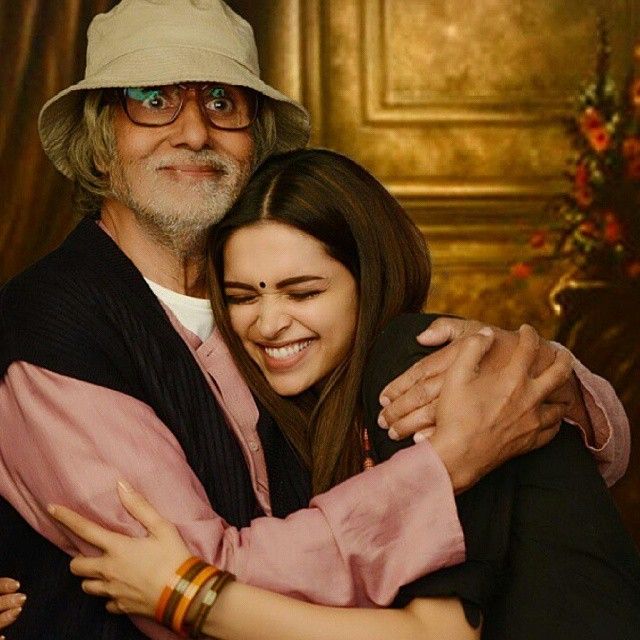
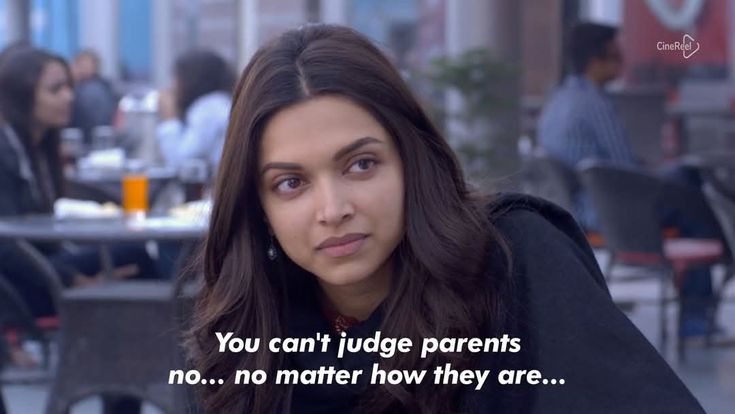
    The film “Piku”, released originally in 2015 and directed by Shoojit Sircar is a film much ahead of its time. When it was released, it was more of a “comedy movie”, as it reeks with jokes on constipation backed up by Deepika Padukone, Amitabh Bachchan and Irrfan’s exceptional acting prowess. The first time I watched “Piku”, it was on my 12th birthday at a theatre near my home and I was suffering from a cold. I distinctly remember the humour didn’t quite appeal to me. Neither did the ethos and simplistic character of the film. As a pre-teen, I was more drawn towards the flashy elements and symbolisms, in books and movies alike. I remember being so annoyed with Bhaskor Banerjee’s endless tantrums wondering why Piku has “given up” on so much in her life for her “selfish” father. The party scene where Bhaskor Banerjee drove away an eligible bachelor from Piku by speaking about her sex life had gotten on my nerves. The songs, however, hit the right chords of my heart.

    Years passed and a decade elapsed. Its 2025. I grew up into an adult weary of the world, especially its deep-seated patriarchy. Right before by 22nd birthday, “Piku” has been re-released in the theatres. Thanks to the never-ending reels and posts on cinema that keep popping up on my Instagram feed, the film is fresh in my mind. However, my perspectives have changed.

    Not all ‘feminist’ women fight violence. Some, or rather most, silently fight the engrained stereotypes and patriarchy rooted in our society without complaining. And if they are lucky, they might also be supported by a ‘feminist’ guardian like Bhaskor Banerjee. In fact, his character is perhaps one of the most ‘feminist’ characters I have ever come across in fiction. The same scene, where he eventually drives away the eligible bachelor by asking him what he means by a “nice girl”, appeals to me more than anything. Women are so trained to be submissive and respectful even at the cost of their self-respect that they forget what it is like to channelize and experience their inner being. Does being moody and opinionated woman qualify as being a “nice” one? Food for thought, right?

    Another significant aspect of the film is not forgetting one’s roots. Since the beginning Bhaskor Banerjee was firm on not selling their ancestral home, ‘Champakunj’ in Kolkata. Piku, on the other hand, standing on the threshold of her roots and progress, was divided in her head. It was only after going out on the Calcutta tour with Rana, where he subtly chimes in about losing everything if one lets go of their roots, that she supports her father’s decision of not selling ‘Champakunj’.

    There is a widely floating thought around this film that Bhaskor Banerjee did not want Piku to get married. Well, what I gathered after watching it this time is that marriage in our society is an institution enmeshed in patriarchy and he did not want Piku to fall prey to it and lose her identity while serving her husband and in-laws. Back as a pre-teen, I had thought that the world has ‘changed’ or is rather ‘changing’ or an even better word would be ‘progressing’. A decade later, I realise that progress is a utopian fantasy and that reality has its own set of rules that it abides by.

    Women are believed to be ‘incomplete’ in their lives without a man, be it economically or security-wise. Over the last decade, I have learnt that ‘independence’ is not a word that the world is willing to adapt to with respect to a woman. This is precisely the stigma that the film ‘Piku’ challenges. ‘Piku’ asserts that women are capable of running a house on their own and can choose whatever kind of life that they want for themselves.

    Piku was unapologetic about who she was and about her father despite the awkward situations she had to encounter because of him. To her, it was his happiness and well-being that mattered the most. In one of the final scenes when Rana asks Piku how she will manage everything on her own after Bhaskor Banerjee’s demise, it was her response that defined the film, “Itna toh prepare karke gaye baba”. Our society needs more parents, guardians and mentors like him.

  • Calcutta is often revered as a city that is slow and steeped in the past as a relic of the bygone ages. In contemporary art and writings, it is often associated with evoking memories. As we recall the past, somewhere or the other we see how the city too possesses a character arc in shaping the trajectory of our lives. “Mayanagar”, a Bengali-language Indian-French-Norwegian film that was released internationally as “Once Upon a Time in Calcutta” is an ode to this alluring nostalgic psyche and semblance of the city. Directed by Aditya Vikram Sengupta, the film had premiered first at the 2021 Venice Film Festival and has now released in theatres across Calcutta.

    The film, as the name suggests, has been shot with Calcutta standing in all her haunting glory as the backdrop. As it is known to the common man here in this city and to people across the globe, that Bengal has sought a new-found identity through the evocative writings, music and paintings of Nobel Laureate Rabindranath Tagore (revered widely as ‘Kabiguru’) since the 20th century. In this film, this identity of Bengal has been foraged by the makers, thus providing this cinematic creation with its meditative identity as Rabindra Sangeet, both in its original tune and modern remix reverberate through the poetic frames.

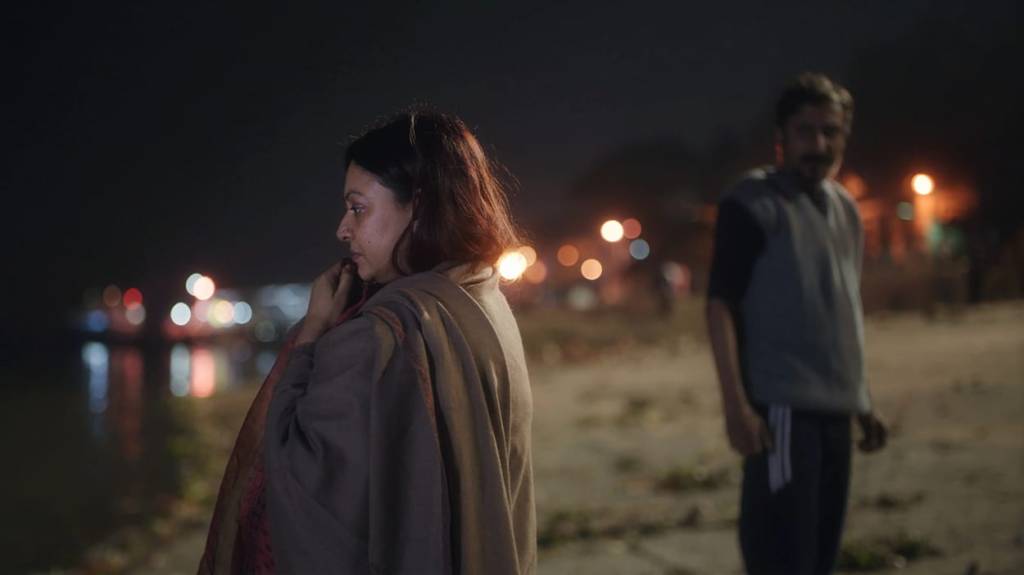
    The cast of the film has delivered an exemplary performance as they portrayed the sombre emotions. Sreelekha Mitra plays the role of Ela, a grief-stricken mother who lost her daughter to an unnamed illness. She is determined to start an independent life. Ela is an illegitimate daughter of a cabaret dancer who had a romantic affair with the owner of a grand theatre in North Calcutta. Bratya Basu plays the role of Bubu, Ela’s melancholic stepbrother who lives in the deserted theatre-home. Despite his limited screen time, his performance is very moving.

    As the storyline of the film unravels, we observe how Ela’s marriage with Shishir played by Satrajit Sarkar, bears the brunt of the death of their child. A disillusioned Ela, who works as an astrologer in a low-budget television show, seeks solace in romantic rendezvous with her childhood neighbour Bhaskar played by Arindam Ghosh, who is an engineer carrying out the construction of a bridge traversing through the heart of Calcutta. Ela also happens to be infatuated with her superior at work who is the owner of a fraudulent investment scheme. Ela uses him to secure her dream of buying a house for herself. However, all of her planning falls through eventually. The film tries to depict how corruption and red-tapism that is so rampant in the city obstructs the execution of what each character wanted for themselves.

    The life of Raja played by Shayak Roy is symbolic of the lives of millions of agents who fall prey to the endless greed of their company owners, as they lose everything they have accumulated through their life’s work. The film endeavours to capture the suffering of the middle and lower classes of Calcutta, thus bringing in the wider picture of the city’s socio-economic classes and the hardships faced by the downtrodden.

    As mentioned before, the Bengali identity rooted in Tagore’s oeuvre is both boon and a bane. The collapse of the bridge that cuts through the heart of the city, falling over the innumerable sculptures of Tagore, is a rather stern proclamation of how frail the pseudo-intellectual façade of present-day Bengalis or Calcuttans is.

    A poignant cinematic reverie, ‘Mayanagar’ is largely characterized by its implicit and explicit depiction of broken bridges in this bustling megapolis. Perhaps a metaphorical representation for the marital disputes and extramarital relationships shaping the storyline of the film. As the popular Rabindra Sangeet ‘Alok er ei jhorna dharay’ echoes in its original and remix versions, it seems to be a fraying thread binding the city’s old and new, its dimming light and engulfing darkness. By the time the curtain falls, the audience is shockingly spellbound at how the soul gets consumed so easily as one navigates life here with its hunger and terror in the city for the soul that is Calcutta.